


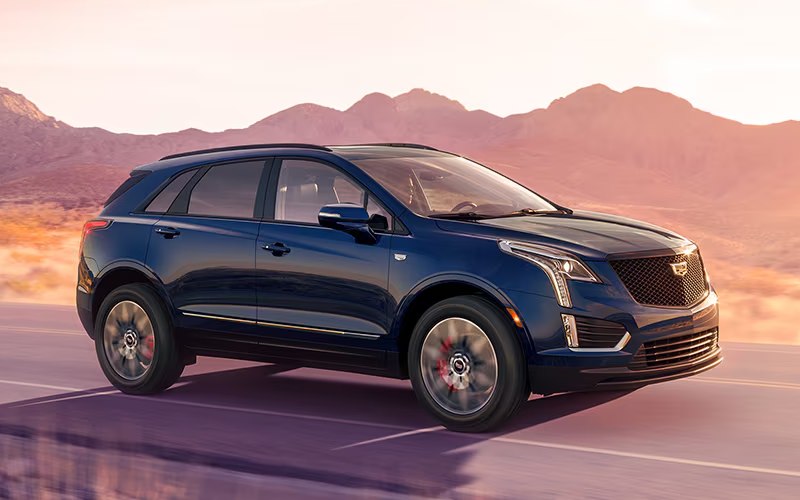
Landmark Cadillac – Cadillac vs Lexus for Quiet, Composed Highway and Country-Road Driving near Decatur, IL
Central Illinois driving asks a lot of a luxury vehicle. Between steady I-72 commutes, two-lane stretches on US-51 and IL-48, chip-seal county roads around Mount Zion and Warrensburg, and winter crosswinds sweeping across the fields, the best luxury SUVs and sedans need to stay quiet, stable, and comfortable without breaking a sweat. At Landmark Cadillac, we help shoppers weighing Cadillac against Lexus focus on what matters most here near Decatur—long-haul calm, confident control in gusty conditions, and technology that lowers fatigue on familiar routes.
Both brands build refined vehicles. The difference we point out on test drives around Lake Decatur and the I-72 corridor is how Cadillac’s chassis tuning, advanced driver-assistance availability, and cabin ergonomics come together to deliver a relaxed, composed feel across body styles—sedan, SUV, and EV—without sacrificing responsiveness when you need to change lanes quickly or avoid a pothole after a freeze-thaw cycle.
Below, we frame the comparison around real roads and routines we know well. If you are considering a luxury midsize SUV, a premium sport sedan, or an all-electric option, this guide will help you decide which brand fits the way Decatur drives.
Start with ride and handling. Cadillac’s road manners are shaped by precise body control and smart damping that smooth out expansion joints on I-72 and the sharper edges you encounter on country lanes. Many Cadillac models offer Magnetic Ride Control—an adaptive damping system that reads the road and adjusts in milliseconds—so the body stays composed over ripples, and the cabin remains calm if a crosswind hits as you clear an overpass. Lexus tunes for serenity as well and often feels softly sprung, but on undulating pavement the Cadillac approach tends to reduce fore-aft bobbing while keeping steering response crisp for quick maneuvers around town and on the highway.
Noise management is another daily difference. Cadillac cabins make widespread use of laminated glass, tight door seals, and active noise cancellation. The result is a hushed environment that keeps conversations easy even when a west wind gusts across open fields. Lexus invests heavily in acoustic materials, too. In our local experience, Cadillac’s combination of wind-noise reduction and tire-noise tuning stands out on coarser chip-seal segments common outside Decatur and Long Creek, where a few decibels of extra calm can make a long commute feel shorter.
Technology that reduces fatigue matters on straight, windy stretches of I-72, and this is where Cadillac’s available Super Cruise® can be a game-changer. On compatible divided highways, Super Cruise® enables hands-free driving with driver attention monitoring, lane-centering, and automatic lane change functionality on select vehicles. Lexus offers advanced systems like Traffic Jam Assist and Lexus Teammate on specific models with limited operating domains; those can assist at lower speeds and in certain conditions. For frequent trips between Decatur, Springfield, Champaign, and Bloomington-Normal, Cadillac’s approach can cover more of the miles hands-free on compatible mapped highways, so you arrive fresher.
Inside the cabin, both brands deliver craftsmanship; the nuance is in how the space supports long days behind the wheel. Cadillac seats typically pair multi-way adjustability with supportive bolstering that keeps you planted without pressure points by the time you leave Fairview Park or Forsyth for a longer loop. Steering wheels that heat quickly, fast-acting ventilated seating, and intuitive climate controls are appreciated in Illinois seasons that can swing 30 degrees in a week. Lexus counters with its own seat comfort reputation, yet in back-to-back drives, shoppers often note Cadillac’s seat contouring and posture support feel more tailored for extended interstate time.
For families leaning toward SUVs, cargo flexibility and third-row access matter on school and sports runs. Cadillac’s SUV lineup offers smartly shaped cargo bays and low liftover heights that make it easier to load a stroller or hockey bag on a windy evening by the Civic Center. Lexus packaging is efficient, but Cadillac’s square openings and flat load floors can reduce the number of trips when the back is full. If you tow a small fishing boat to Lake Decatur, available trailering tech on Cadillac SUVs—camera views and stability aids—adds confidence when crosswinds kick up on the way home.
Electric options are increasingly part of the conversation. Cadillac’s growing EV family brings intuitive interfaces, expansive digital displays, and a serene driving character that suits suburban and rural Illinois equally well. Lexus is expanding its electrified offerings, and both brands emphasize quiet, smooth operation. What stands out in Cadillac EVs is the blend of one-pedal driving capability, strong regenerative braking tuning, and highway composure that makes winter driving feel natural the first week you switch from a gas vehicle.
Winter preparedness is a shared focus, and both brands offer capable all-wheel drive across sedans and SUVs. Where Cadillac distinguishes itself for Decatur drivers is with advanced AWD systems that can actively shift torque side to side, enhancing confidence when a shaded patch of IL-121 surprises you with leftover frost. Paired with available driver-selectable modes, you can tailor steering weight and throttle response for sloppy days without dulling the chassis on dry pavement.
To make these differences easy to feel, we suggest a specific route that mirrors everyday life and reveals how each brand behaves when the wind picks up and the pavement changes character.
- Start on I-72 westbound at the US-51 interchange to evaluate straight-line stability, passing confidence, and wind isolation across the Decatur Lake bridges.
- Exit onto US-51 north and use a safe passing zone to feel midrange response and how the chassis settles after a lane change.
- Turn onto a county road toward Harristown or Mount Zion to assess chip-seal noise and suspension composure over patched asphalt.
- Finish with a downtown Decatur loop to test tight-turn maneuverability and low-speed ride on expansion joints and brick segments.
As you consider each brand’s strengths, these are the everyday advantages our guests notice when comparing Cadillac and Lexus around Decatur and the surrounding communities.
- Ride composure on mixed pavement: Cadillac’s available Magnetic Ride Control helps the body stay settled over ripples, bridges, and patchwork repairs without floating or harshness.
- Highway fatigue reduction: Available Super Cruise® on compatible roads in Illinois delivers hands-free confidence for long I-72 and I-55 stretches, with smooth lane-centering and driver attention support.
- Quiet-cabin tuning: Cadillac’s acoustic glazing and active noise cancellation help hush wind and road texture on rural chip-seal, keeping conversations clear in the second and third rows.
- Ergonomic support: Seat contouring and control placement in Cadillac models make it easy to find a natural posture for two-hour drives to Bloomington-Normal or Peoria without hotspots.
- All-weather traction: Available advanced AWD and drive modes provide reassuring launches on snowy mornings and stable cornering when gusts sweep across open fields.
- Practical space: Square cargo areas and low liftover heights simplify loading gear for a Saturday at Lake Decatur or a grocery run in Forsyth.
Lexus remains an excellent choice for serene manners and interior refinement, and we encourage in-market shoppers to experience both. What often tips the decision toward Cadillac here is how confidently the lineup handles Midwest realities—variable surfaces, steady winds, and long, straight interstate runs—while integrating driver assistance that genuinely lowers the mental load.
Service support is part of the ownership equation, too. Our Cadillac Certified Service team in Springfield understands how Illinois weather and road conditions affect tires, brakes, and battery health, and we can tailor maintenance to your commute patterns between Decatur, Rochester, and Jacksonville. That local, model-specific knowledge complements the way the vehicles are engineered—so your Cadillac continues to feel tight, quiet, and confident well past the first winter.
If you are cross-shopping sedans, the contrast is similar. Cadillac sport sedans balance athletic steering with a supple ride that keeps expansion joints from echoing through the cabin, while Lexus offers poised, quiet cruisers. For drivers who want a touch more communication from the front tires without sacrificing ride quality on imperfect pavement, Cadillac’s tuning can feel precisely right for central Illinois. And for enthusiasts, our V-Series models add controlled power for decisive highway merges on I-72 without making daily commutes feel busy or brittle.
We invite you to bring your typical route, passengers, and gear to Landmark Cadillac for a side-by-side drive. We will map a loop that includes I-72, a few county roads, and downtown Decatur surfaces so you can hear, feel, and decide which brand truly fits your life.
Frequently Asked Questions:
Can Super Cruise® be used on drives between Decatur and Springfield?
Super Cruise® is available on select Cadillac models and can be used on compatible, mapped divided highways. Portions of I-72 and I-55 in Illinois are typically included, enabling hands-free driving where conditions permit and the system indicates availability.
How do Cadillac SUVs handle crosswinds on open stretches near Lake Decatur?
Cadillac SUVs combine aero-tuned bodywork, precise steering, and available adaptive damping to maintain straight-line stability in gusty conditions. The result is fewer small steering corrections and a calmer cabin when winds pick up across open fields or bridge decks.
Is Lexus quieter than Cadillac on rough chip-seal roads?
Both brands are impressively quiet. In our local test loops, Cadillac’s combination of laminated glass, body sealing, and noise-canceling often delivers an edge on coarser chip-seal common on rural routes, keeping cabin conversation easier at everyday speeds.
Which brand offers better all-wheel drive for Illinois winters?
Both Cadillac and Lexus offer capable AWD across sedans and SUVs. Cadillac’s available systems can actively shift torque for added stability and traction, which our guests appreciate on slick starts, shaded corners, and windy overpasses during freeze-thaw months.
What should I look for on a test drive to evaluate ride quality?
Include a highway segment to gauge wind and expansion-joint isolation, a two-lane section with imperfect asphalt to feel how the suspension settles after bumps, and a few tight turns to assess steering response. Bring a friend to sit in the second row and note conversation clarity at speed.
How does Landmark Cadillac support owners after the sale?
Our Cadillac Certified Service team provides maintenance tailored to central Illinois driving, from tire and brake inspections to battery checks. We back that with convenient scheduling, genuine GM parts, and a drive-in experience designed to keep you on the road with the performance you expect from Cadillac.
When you are ready, our team will set up that Decatur-focused route, answer layered questions about sedans, SUVs, and EVs, and help you experience the ride, quiet, and technology that make Cadillac a confident choice for life in central Illinois. Schedule your test drive with Landmark Cadillac today, and let our experts match you to the model that fits your daily roads.
Request more information
Connect with us